AI Visibility Tracker: what it is, what to track, and how to choose one
The complete guide to tracking how AI answer engines mention, cite and recommend your brand - including a comparison with SEO rank tracking, a buyer's checklist, and the workflow for turning findings into fixes.
Read the guide →
What are the best AI search visibility tracking tools for 2026?
A neutral look at the main AI visibility tools, grouped by who each one is actually built for. What separates them, what they share, and how to judge them for yourself.
Read guide →
ChatGPT visibility tracker: how to track your brand in ChatGPT
ChatGPT answers from two different places, and they fail differently. What a ChatGPT visibility tracker should actually measure, and what to do with each result.
Read guide →
Gemini visibility tracker: how to track brand visibility in Gemini
Gemini is not one surface. The Gemini app, Google AI Overviews and AI Mode give different answers to the same question. What that means for tracking, and how to avoid the most common measurement error.
Read guide →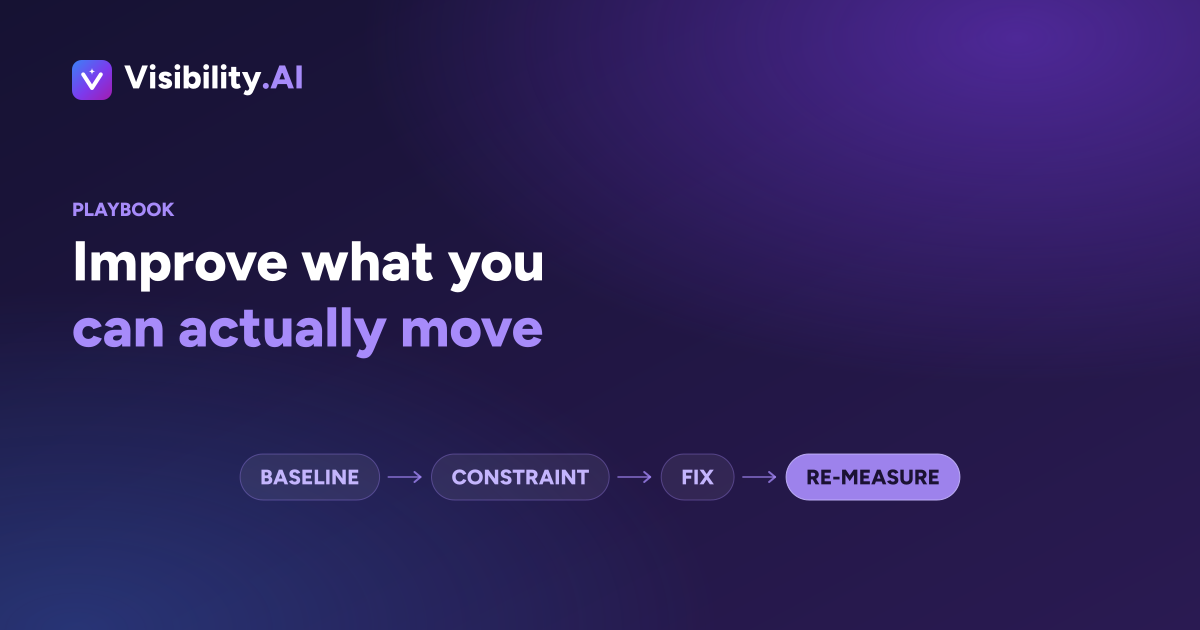
How to improve brand visibility in AI search engines
A sequenced playbook for moving your AI visibility from a real baseline: find the one constraint costing you answers, fix it in leverage order, and re-measure honestly.
Read guide →
Perplexity visibility tracker: how to track citations in Perplexity
Perplexity cites every answer, which makes it the most legible AI engine to track. How to read those citations, and why what you learn there transfers to engines that hide their sources.
Read guide →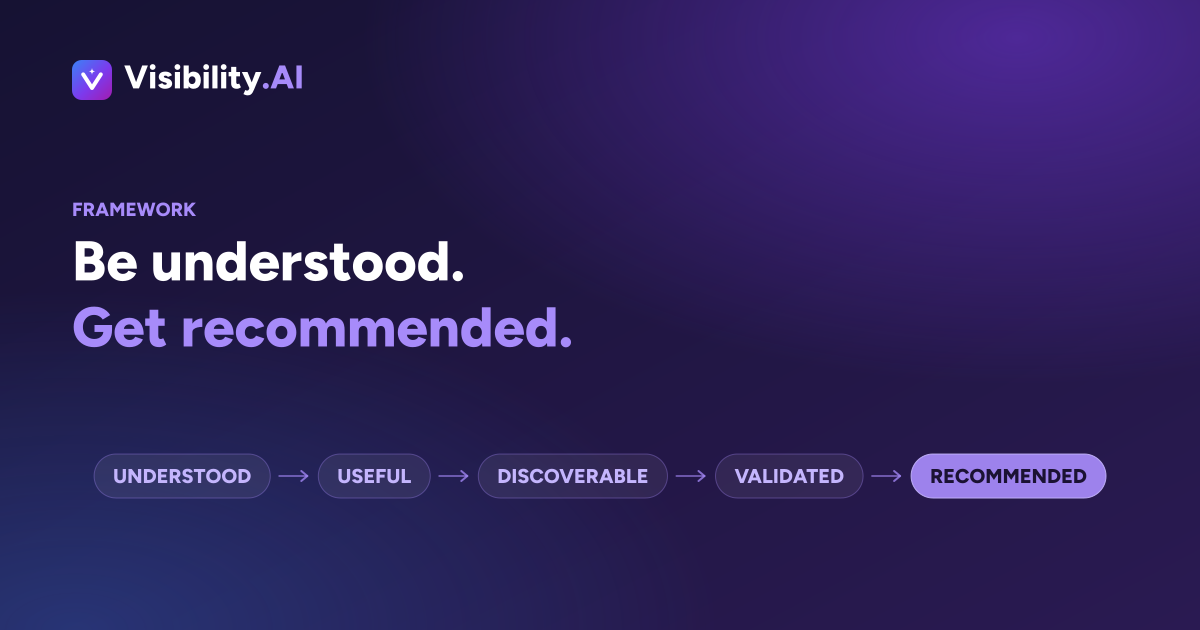
How to get your business into AI answers
Five pillars for getting named in AI answers: be understood, useful, discoverable, validated, recommended. What each one means and the work each takes.
Read guide →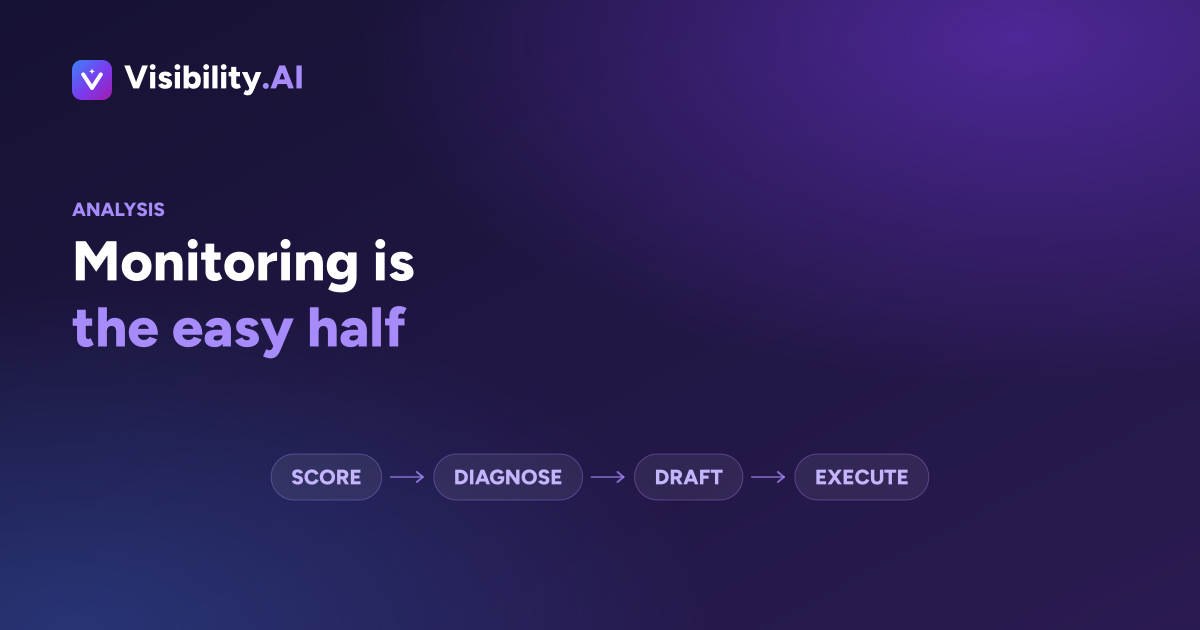
Why AI visibility tools stop at monitoring
Every AI visibility tool monitors. Almost none tell you what to fix. Why the category stops at the dashboard, and the five levels of actually fixing it.
Read guide →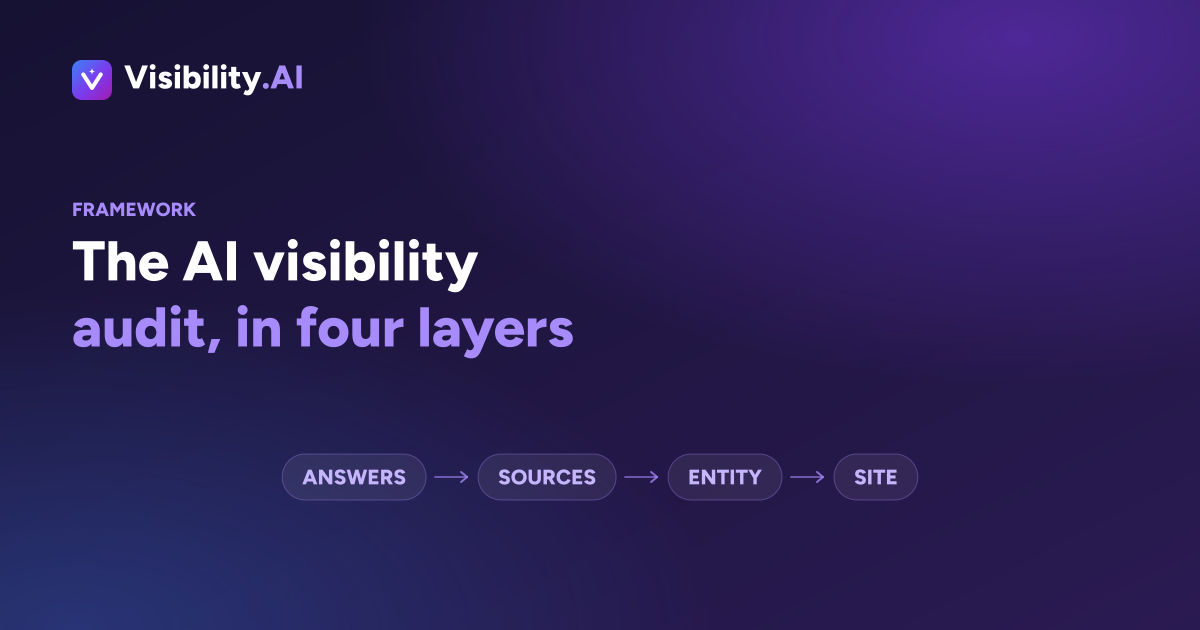
AI visibility audit: a four-layer framework
An AI visibility audit finds why AI engines leave your brand out, and what to fix. Four layers: the answers, the sources, your entity, and your site.
Read guide →
Free AI visibility checker: what it can really tell you
A free AI visibility checker shows whether AI names your brand. How to run one properly, read the result, and know where a single check stops being useful.
Read guide →
AI referral traffic: how to track it in GA4 and logs
AI referral traffic is the visits you get when someone clicks a link in an AI answer. How to separate it in GA4, read it in logs, and what you can't see.
Read guide →
How to track AI visibility: a practical guide
How are you tracking AI visibility? Here's a practical framework: fix your prompts, scan every engine, measure share of voice, and act on the trend.
Read guide →
AI Search Visibility: How to Get Cited in AI Answers
AI search visibility is whether your brand shows up across AI surfaces like ChatGPT, Perplexity and Google AI Overviews. Here's how to audit and improve it.
Read guide →
AI Visibility: The Complete Guide for 2026
AI visibility is the new measure of whether your brand shows up when buyers ask AI. Here's what it is, why it matters, how to measure it, and how to improve it.
Read guide →
Which AI engines should you track in 2026?
Not all answer engines matter equally to your brand. Here's a practical guide to the engines worth tracking in 2026 - and how to decide where to focus.
Read guide →
What is answer engine optimization (AEO)? Understanding AEO for the future of search
AEO is the practice of getting named inside AI answers rather than ranking in a list. What it is, how it differs from SEO, how answers are actually assembled, and what earns a citation.
Read guide →
How to prove the ROI of answer-engine optimization
AEO earns budget when you can show it working. Here's how to measure visibility trends over time, tie citations to outcomes, and report to stakeholders.
Read guide →
From visibility gap to published content: an AEO workflow
Finding a gap is easy; closing it is the work. A repeatable AEO workflow that turns visibility gaps into AI-optimized content that earns citations.
Read guide →
The sources AI engines trust (and how to earn a spot)
AI answers are only as good as the sources behind them. Here's how engines pick citations, how to audit where you're absent, and how to earn presence.
Read guide →
Is AI recommending you - or your competitors?
When an AI names 'the best option,' it's usually not you by accident. Here's how to run a competitor visibility audit and act on the gaps.
Read guide →
How to choose the prompts worth tracking for AI visibility
Your prompt set decides what your AI visibility data is worth. Here's how to pick high-intent questions buyers actually ask, and how many to track.
Read guide →
How to measure your brand's share of voice in AI answers
Share of voice is the clearest scoreboard for AI visibility. Here's what it means in answer engines, how to baseline it, and why it moves.
Read guide →